Showing posts with label Indian. Show all posts

Sunday, August 10, 2014

Indian Spiced Carrot Soup with Coconut Cream


The last thing I really want to do is hover over a hot stove during the peak of summer. But sometimes soup calls. Thankfully, this vibrant orange bowl of comfort only needs about 30 minutes of stove top time, without any of the hovering. The ginger and lime brightens up the sweetness of the carrots with the spices add some much needed heat and depth. The soup is thick and velvety without adding any heavy cream or bechamel...a making it vegan and glutton-free friendly, without sacrificing any flavor. The best part? The soup used up the rest of the  monster carrots we were blessed with in a recent CSA box.

adapted from Bon Apetit, 2008

serves 6

The Ingredients:
for the soup

1 tsp whole coriander seeds
1/2 tsp whole yellow mustard seeds
2 Tbsp peanut oil
1/2 tsp garam masala
1 large onion, finely diced
2 Tbsp freshly grated ginger
1 1/2 lbs carrots, peeled and cut into 1/2-inch rounds
juice and zest of 1 lime
4 cups vegetble stock or water
salt and pepper to taste


for the coconut cream
1 - 15 oz can full fat coconut milk (LITE DOES NOT WORK!!)

The Process:
for the coconut cream
Place the unopened can of coconut milk in the refrigerator overnight.

Once chilled, open and spoon out the thick cream that has separated to the top.  Reserve the liquid for another use.

In a chilled bowl, whip the coconut cream until light and fluffy, about 2 minutes.  Keep chilled until ready to use.

for the soup

Heat a small, dry skillet over medium-high heat. Add the coriander and mustard seeds. Cook, stirring frequently, until the seeds are lightly toasted and fragrant.  Allow to cool. Grind into a fine powder using a spice mill or mortar and pestle.

Heat the oil in large saucepan over medium-high heat. Add ground seeds and garam masala, stir 1 minute. Add the ginger and onion, sautee until the onion begins to soften, about 2-3 minutes. Add the carrots, lime zest and broth. Bring the minxture to a boil. Reduce heat to medium-low and simmer uncovered until carrots are tender, about 30 minutes.

Cool slightly. Working in batches, puree in blender until smooth, or puree in the saucepan using an immersion blender. Stir in lime juice. Season with salt and pepper to taste.

Serve with a dollop of coconut cream.

Friday, May 2, 2014

IPA Spiked Chicken Tikka Masala


Tikka Masala is no stranger in our household. I've made this dish, and enough of its Indian relatives to whip it up with nothing more than a cursory glance at a ghee stained recipe. The amount of ginger and garlic often varies. Sometimes I use a serrano pepper to two of a kick of heat, other time a subtle touch of chili powder. Fresh and canned tomatoes alternate depending on my mood and the seasons (there are few things sadder than a "tomato" in the middle of a Midwestern winter).

So why does this warrant another visit to this blog...a blog that attempts to chronicle my culinary adventures as I test new waters?

In a word,

Beer.

Ross had requested tikka masala when I asked for dishes to round out our week of dinners. As if by fate, the day before I had planned on our Indian feast, the Beeroness posted a yogurt and ale marinaded grilled chicken. The similarities between her chicken and the marinade for my chicken tikka were uncanny. These long lost cousins were only divided by a mix up of spices and the addition of beer. The discover was enough to revisit and modify this favorite.

I hope you enjoy this dish as much as we did.

Inspired and adapted from The Beeroness, The Pioneer Woman, and my tried and true tikka masala recipe courtesy of Monica Bhide

serves 4

The Ingredients:
for the chicken and marinade
1 1/2 lb boneless, skinless chicken breasts, cubed
3/4 cup Greek yogurt
1/2 cup IPA
1 Tbsp garam masala
1/2 tsp chili powder
1/2 tsp smoked paprika
2 cloves garlic, minced
1-inch thumb of ginger, minced

for the Tikka Masala
3 Tbsp unsalted butter
1 medium red onion, finely diced
3 cloves of garlic, minced
1 inch thumb of ginger, minced
1 serrano pepper, finely diced
1 Tbsp garam masala
1/4 tsp turmeric
1 - 15 oz can petite diced tomatoes
2 Tbsp tomato paste
1 cup heavy cream
2 large handfuls of spinach, coarsely chopped 
1/4 cup IPA
salt to taste

for the Basmati rice
1 cup basmati rice
2 Tbsp unsalted butter
1/2 tsp turmeric
1/2 tsp salt
2 cups vegetable broth or water
1/2 cup frozen peas

The Process:
for the marinade
In a large bowl or gallon-sized zip top bag, combine the yogurt, IPA, and spices. Mix well. Add the cubed chicken and stir to coat. Cover and refrigerate 6-8 hours.

for the Tikka Masala:
Pre-heat the broiler.

Remove the chicken from the marinade. Thread onto metal skewers and arrange on an oiled cooling rack set over a foil lined baking sheet. Broil the chicken, 10" from the heat source, 5-7 minutes per side or until the chicken is beginning to char and juices run clear. Set aside.

Meanwhile, prep the rice:
In a medium saucepan, combine the butter, rice, turmeric, salt, and broth. Bring to a boil and stir until the butter has melted. Reduce to a low simmer and cover, cooking 30-35 minutes or until rice is tender and most of the liquid is absorbed.

Back to the Tikka Masala:
Melt the butter in a large skillet set over medium-high heat. Add the onion, ginger, garlic and serrano pepper. Sauté until fragrant and the onion is translucent, 6-8 minutes.
Add the spices and stir until fragrant, about 30 seconds. Add 1 tsp of salt, the diced tomato and the tomato paste. Simmer on medium low for about 5 minutes.

Whisk in the heavy cream and return to a simmer.

Remove the cooked chicken from the skewers and stir into the sauce. Cover and simmer until the chicken is heated through.

Stir in the chopped spinach and simmer until the spinach wilts. Remove the tikka masala from heat and stir in the 1/4 cup IPA. Adjust salt and seasoning to taste.

Prior to serving, stir 1/2 cup peas into the basmati rice. Spoon pea-studded rice onto each plate and top with tikka masala

Saturday, February 9, 2013

Quick and Dirty Spinach Lentil Curry


Indian food and I, we've come to an understanding.  We have a method.  The dishes almost always turn out. 

There is occasionally an exception though. 

Ross and I have been going back and forth on the proper food pairings for an IPA...an India Pale Ale.  Traditionally a very hop forward beer.  Bitter.  Think sucking on grapefruit pith.  Well, depending on the hops.  I enjoy them, to an extent.  Ross usually avoids them at all costs.

The debate stems around spicy or not spicy.  The bitterness in hops actually intensives the heat level of most foods.  And the higher alcohol content opens up the receptors on the tongue...also heightening the heat experience.  Usually not a pleasant dining experience.  Unless, of course, you like the sensation of your face burning off.

For some reason Ross felt Indian cuisine and IPAs would pair well.  With my high heat preference in Indian food, I objected.  (I am right by the way, he just won't admit it, but seeing as he doesn't like insanely spicy food, or IPA, I do not hold his opinion of either in very high regard.  But I digress...and I still love him)

So as an experiment I tried a variation of this recipe, substituting some of the cooking liquid for an IPA.  Odell's Hopslam.  Excellent beer.  Such a waste to cook with it.  Again, I digress...

The cooking process released a bitterness in the hops, a musky, dirt-like bitterness, that made the dish near unpalatable.  Lesson learned.  Drink it with dinner, but do not cook with it...at least not this type of recipe.  IPAs do make unbelievable marinades, though...

Back to dinner...

This vegan friendly dish is quick and lovely.  So so simple.  It follows the same method I use for nearly almost any curry: saute onions, add ginger and garlic, add spice, stir til fragrant, add protein and cooking liquid (if needed), add veggies, serve.  So simple. 

Enjoy!

Inspired by Elissa's recipe at Kitchen Demure

serves 4

The Ingredients:
2 Tbsp ghee or peanut oil
1 large onion, diced
2 fat cloves of garlic, minced
1 - inch piece of ginger, minced
1 serrano pepper, minced (optional)
1 1/2 Tbsp garam masala
1 1/3 cup red lentils
2 cups water
1 tsp salt
2/3 cups dry white wine
2 Tbsp tomato paste
1 bunch spinach, chopped (about 5 cups)

The Process:
In a large skillet heat the oil over medium high heat, and add the onion, ginger, garlic, and pepper.  Saute until just tender, 2-3 minutes.  Add the garam masala and stir until fragrant, about one minute. 
 Add the lentils, water, salt, and wine.  Bring the mixture to a boil, reduce heat.  Cover and simmer for 15 to 20 minutes, or until the lentils are tender.  Stir in the tomato paste.  Add the spinach.  Cook an additional 5 minutes, or until he spinach has wilted.

Serve.

Friday, November 9, 2012

Curried Pumpkin Soup

 Fall!  Pumpkins!  Soup!  Curry!  These are a few of my favorite things...

Light, complex, spicy, smooth and filling.  Deceivingly filling.  You'd be surprised how little soup you need to sate an appetite after an afternoon raking leaves.  And perfect for a gathering when many hungry hands may be idling.  This soup can be made ahead, chilled and re-heated when ready to serve.  Or, transferered into a slow cooker to linger and warm for whenever pepple are ready to eat.

I prefer the slightly sweeter and smokey flavor oven roasted pumpkin lends to recipes, so I opted to replace a portion of the originally recipe's canned pumpkin with my own roasted variety.  The spices are easily modified to accommodate any palate  And the soup does play well with heat...so feel free to add more red pepper or a dash or too of hot pepper sauce to liven up the tongue a bit.

adapted from Epicurious

serves 16-18

The Ingredients:
2 medium onions, finely chopped
2 Tbsp oil
3-4  garlic cloves, mince
2-3 -inch knob of fresh ginger, peeled and minced
2 tsp ground cumin
1 tsp ground coriander
1/4 tsp cinnamon
1/8 tsp ground cardamom
2 tsp salt
1 small pie pumpkin (2-3 lbs)
1 - 15 oz can pumpkin puree
6 cups chicken or vegetable stock
1 - 15oz can  coconut milk

The Process:
Preheat the oven to 450.  Slice the pumpkin, scoop out the seeds and place cut side down on an oiled baking sheet.  Bake for 45-60 minutes,or until soft and beginning to carmelize, flipping cut side up halfway through.  Remove from oven and set aside until cool enough to handle.

Scoop out the softened pumpkin flesh.  Mash slightly for a smoother soup, or leave as scooped for more texture.  

Meanwhile, heat a large heavy bottomed saucepan over medium high heat, and sautee the onions until soft, about 3-5 minutes.  Add the ginger and garlic, sautee 1 minute longer.  Stir in the cumin, coriander, cardamom and cinnamon, mixing until the onions are well coated*.

Add the pepper flakes, salt, canned pumpkin, fresh pumpkin, broth, coconut milk.  Bring to a simmer and let cook for 30 minutes, stirring occasionally.   For a smooth soup, puree in batches with  food process, or process with an immersion blender, or serve as is.  Thin with additional broth, if desired.

* in lieu of the individual spices, you can substitute 1 Tbsp of your favorite garam masala.


Saturday, October 20, 2012

Curried Squash

This past week I was tasked with pairing a meal with a harvest beer.  I'm not quite sure they realize the potential monster they released with this charge...

At our last beer session, we were treated to five samples.  The one that struck me the most was Weyerbacher's Imperial Pumpkin Ale.  As with most pumpkin ales, a heavy spice hit the nose first.  I braced myself for another cloyingly sweet, wannabe pumpkin pie concoction and was humbled and shamed by what I actually tasted.  First the spice hit my tongue, but not the typical pumpkin pie spice...it was warm, and familiar.  The flavor lingered and danced on the tip of my tongue, toying and teasing...not quite being placed. Another sip in...cardamom.   Oh, cinnamon and nutmeg joined the pas de trio, but the cardamom was star.  Supported by a dry, malty backbone, I was in pure heaven.  And had a serious craving for curry.

Thus this recipe was born.

Sadly, Weyberbacher was not to be had.  However a similarly spiced and not overly sweet ale found its way into it's place...Brooklyn's Post Road Pumpkin Ale.


I had many squash on hand to choice from.  A buttery and tender acorn squash.  Robust, but mild pumpkin.  Slightly sweet butternut.  Nutty and melt in you mouth red kuri...

As fall seems dominated by pumpkin and butternut, and as I did not want the sweeter notes these to squash tend to lend, I chose the red kuri and a smaller acorn to create the dish.  The result was buttery and nutty, with a hint of sweetness from the coconut to balance the dryness of the inspiring beer and a complex dance of warm spice from the garam masala.  The ginger lingered in the back.

Served on its own, or with a hearty piece or two of naan to sop up the sauces, this dish makes for a wonderful fall meal.

the recipe is my own

serves 6-8

The Ingredients:
2 Tbsp vegetable oil or ghee
1 red onion, diced
3-4 cloves garlic, minced
1 1/2" knob of fresh ginger, minced
2 Tbsp garam masala
1/2 vegetable or chicken stock
1 - 15 oz can coconut milk
8 cups dished squash (pumpkin, acorn, red kuri, butternut and delicacta ...)
salt and pepper to taste

The Process:
Heat the oil or ghee in a large, deep skillet over medium-high heat.   Add the onions, garlic and ginger.  Saute until until soft and fragrant, about 5-7 minutes.  Add the garam maslam and stir until well combined.
Add the cubed squash, broth and coconut milk.  Bring the mixture to a gentle boil, cover and reduce heat.  Simmer on low for 30-40 minutes, or until the squash is tender.  Uncover and simmer and additional 10 minutes to allow the sauce to thicken.
 Season with salt and pepper to taste. 

Monday, July 16, 2012

Punjabi Greens

The last few CSA boxes we've received have been blessed with gorgeous root vegetables, even in the midst of the drought the farm has been facing.  A few of the season's plants are beyond reviving...lettuce, broccoli, cauliflower....  The peas have given up.  The fennel has bolted.  It is a rough year for them.  Yet still they have managed to provided an astounding and tasty array of vegetables every week.  Never have I felt to connected to th4e food I prepare, nor so grateful for all of the hard work that goes into preparing it!

But the root veggies...beets, turnips, radishes!  They are small, sweet and such an amazing treat.  When we opened our box we were treated to an added bonus.   We were given the plant root and all  So many tasty greens!  These would not go to waste.

Rather than sauteeing them up with garlic as I am usually wont to do, I turned to an Indian cookbook to see what other recipes may avail themselves to these dark leafy greens.  I'd had wonderful luck with Paleek paneer and hoped for similar inspiration.

The recipe I fell upon was Sarson Da Saag...Punjabi Mustard Greens.  No mustard greens were to be had, but the jist of the recipe is the same.

adapted from the Everything Indian Cookbook by Monica Bhide

serves 4

The Ingredients:
1 lb assorted greens (mustard, collard, turnip, beet)
1/4 lb fresh spinach
1 small turnip, diced
3 cups water or vegetable stock
2 Tbsp ghee or oil
1 tsp ginger-garlic paste *
2 Tbsp cornmeal
salt to taste
butter for serving

*if you cannot find ginger-garlic paste, mince together equal parts fresh ginger and fresh garlic

The Process:
Combine the greens, spinach and turnip in a large saucepan set over medium-high heat.  Add about 2 cups of water or stock and bring to a boil.  Cook until the turnips are tender, about 12 minutes.  Remove from heat and drain any liquid.  Allow the vegetables to cool slightly.

Using a food processor or bleder, puree the vegetables into a thick paste.  Set aside.

Heat the ghee or oil in a large skillet over medium-high heat.  Add the ginger-garlic and saute until fragrant, about 30 seconds.  Add the pureed vegetables and saute for 2-3 minutes.  Sprinkle in the cornmeal and stir well to combine.  Add salt to taste.

Add the remaining water or stock to the skillet and reduce heat to low.  Simmer for 25-30 minutes, adding more water or stock as needed to prevent the dish from dryin gout.

Serve hot, garnished with butter.

The Review:
The dish is traditional served up alongside a large plate of makki di roti.  I can certainly see why!  The creamy greens just scream to be scooped up by an accompanying  flatbread.

This is comfort food at its best.  The preparation brings out all of the best of these leafy greens, without weighing down with too much cream or butter.  I adore creamed spinach and other hearty Southern dishes, but on some sweltering days the extra dairy is just too much.  This dish was so incredibly filling, but light at the same time.

The original recipe called for frozen greens...thawed and drained.  I only had fresh on hand.  Either way this dish is a treat.

I do believe I have found my new favorite go-to recipe when I have extra greens on hand.

Wednesday, May 30, 2012

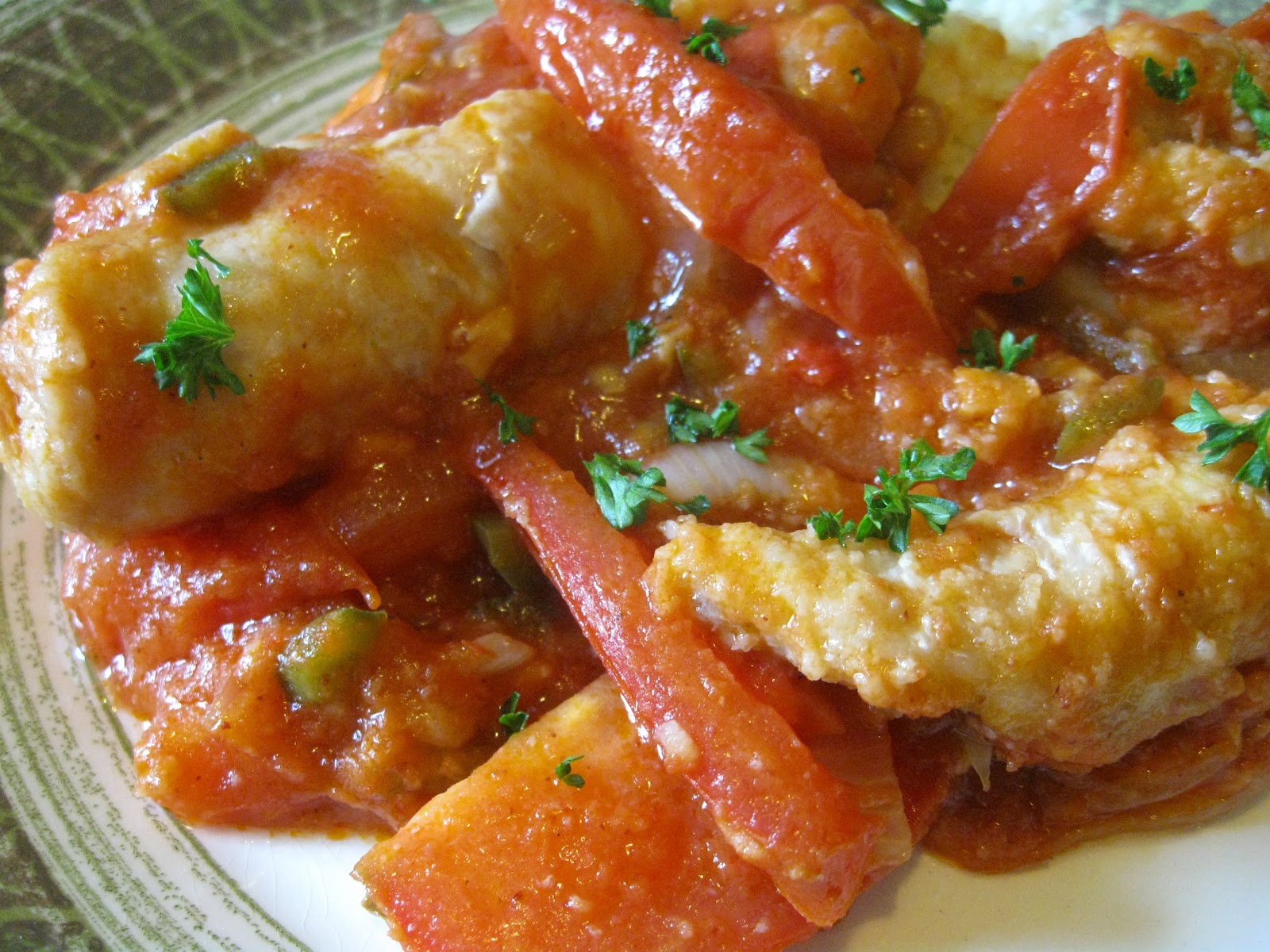
Bengalese Onion and Tomato Fish Curry

I was on a bit of a curry kick.  I wanted something fast.  Fish and veggiecurries often come to the rescue in such situations.  This one grabbed my attention with its Italian like combination of onions and tomato.  How ever would the other spices play into this?


Adapted from The Curry Bible by Jackie Passmore


serves four


The Ingredients:
1 1/2 lbs thick fish fillets, cut into tenders
1/2 cup flour
1 cup ghee, mustard oil, or vegetable oil
1 - 14 oz can crushed tomatoes
4 cloves of garlic, minced
1 large onion, thinly sliced
1 tsp ground chili
2 tsp sugar
1 Tbsp fresh lime juice
2 fresh green chilies (such as Serrano) de-seeded and diced
3 roma tomatoes, cut into wedges
1 inch knob of ginger, minced
fresh cilantro for garnish

The Process:
Place the fish fillets and flour in a large re-sealable bag and toss until the fish is evenly coated.  Heat the oil or ghee in a large, deep skillet.  Carefully add the fish and fry until crisp, but not cooked completely through flipping once, about 4-5 minutes.  Remove the fish to a pan lined in paper towels.  Set aside.

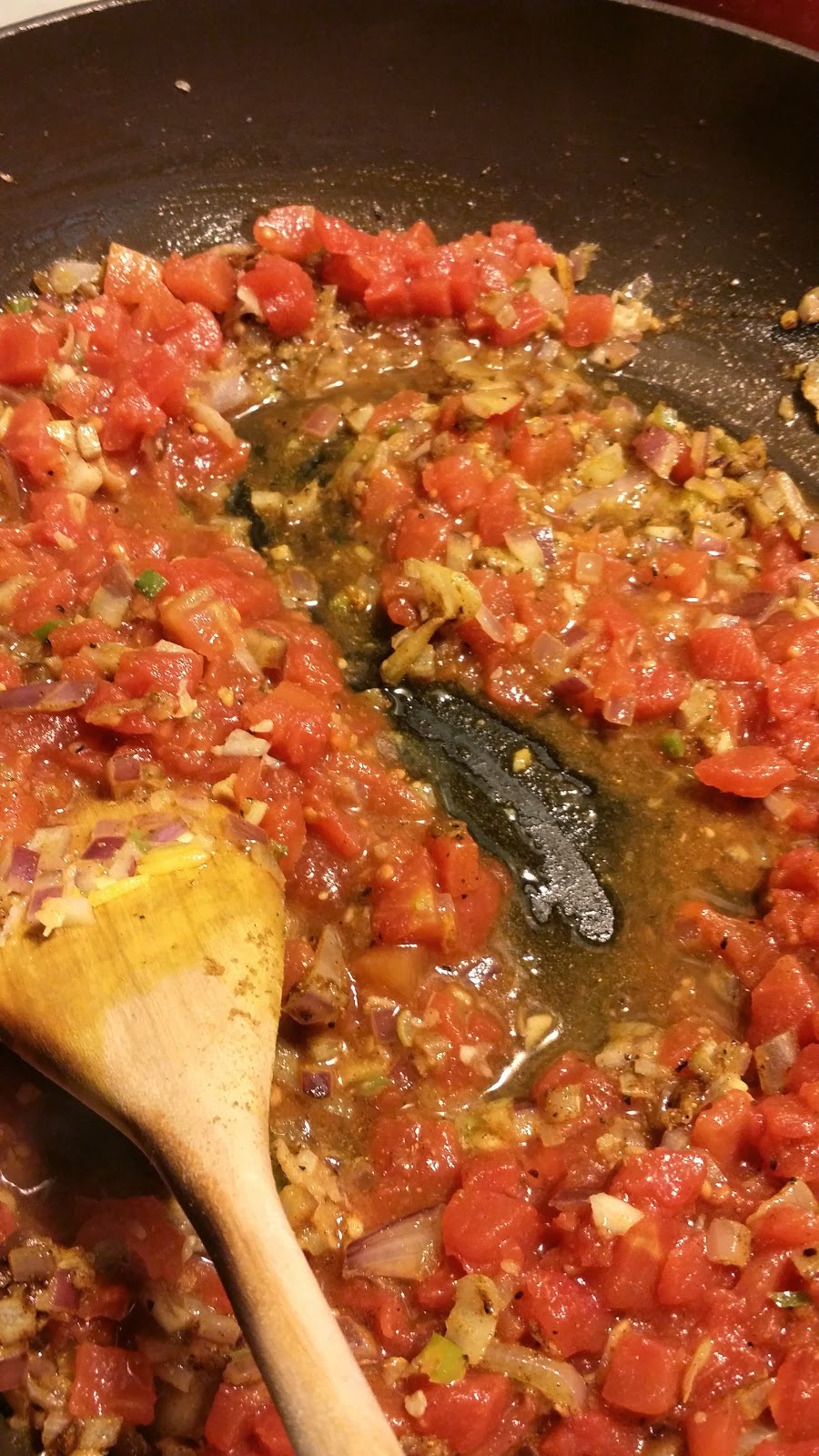
Pour off all but 2 Tbsp of the cooking oil.  Add tomatoes, garlic, onion, and chili powder.  Simmer until the onions have softened and the sauce has thickened.  Add the sugar, lime juice, chilies and ginger.  Stir until combined.  Season with salt and pepper to taste,  Carefully add the fish.  Simmer gently, bring the fish with the sauce until the fish is tender and heated through (about 6-8 minutes).

Transfer to a serving dish or warmed plates and garnish with fresh cilantro.

The Review:
This curry strike me an a wonderful introduction to the hesitant eater.  It boasts many of the same flavors of a well loved tomato-based Italian dish, with a little extra twist.  The recipe is easily adaptable to many variety of fish, though not all are created equal.  I had opted for catfish, despite my aversion to the fish in general.  The flesh ended up chewy and rubbery...with that muddy undertone that I can never quite overcome.  Swai or Tilapia would fair far better for the budget conscious, though cod, halibut, haddock, whiting or pollock would work equally as well.

The curry did make up for the awfully onion-y fish dumpling curry made a few weeks earlier.  It is a dish worth attempting again.

Sunday, May 20, 2012

Kolivartha Curry

I few days ago I handed Ross one of my curry books and told him to pick a chicken dish.  Sometimes meal planning and shopping lists  happen more easily when delegated this way.  This recipe below was the one he chose.  His reasoning?  We already had most of the ingredient list.  Gotta love the man who knows the content of the pantry.

From what I could gather this chicken curry dish is hails from the Chettinad region of Southern Indian. I am hardly an expert in Indian fare, though I adore curries from all over the subcontinent.  Please let me know if you have further tidbits on this culinary destination

Adapted form the Curry Bible by Jacki Passmore

serves 4

The Ingredients:
1 1/2 lbs skinless chicken thigh fillets, cut into tenders
4 cloves garlic, minced
1 inch finger fresh ginger, minced
1 onion, diced
1 large tomato, deseeded and diced
2 Tbsp ghee or oil
1/2 cup finely ground almonds or cashews
1 tsp Garam Masala
1 Tbsp ground coriander
1 tsp ground cumin
1/2 - 1 tsp chili powder
1/2 tsp turmeric
2-3 whole cloves
1 1/2 cups coconut milk
salt to taste
fresh lemon or lime
chopped cilantro to serve

The Process:
Rinse the chicken tenders and pat dry,

In a blender or food processor, pulse the garlic, ginger, and onion until a thick paste forms.  Add the tomato and set aside.

In a large skillet over medium-high heat, heat the oil or ghee.  Add the chicken and saute until lightly browned on all sides.  Remove the chicken and set aside.  Add the tomato-onion mixture to the skillet and cook for 5-6 minutes, stirring constantly.  Add the ground nuts and spices;  stir until well mixed.  

Return the chicken to the pan.  Pour in the coconut milk and season with salt to taste.  Bring the mixture to a simmer and cook, uncovered, until the chicken is tender and the sauce has thickened.

Serve with a drizzle of fresh lemon or lime juice and sprinkled with cilantro.


The Review:
Curries with the slightly sweet flavor of coconut seem to be the biggest hits in our household.  The mild creamy flavors were well balanced and complimented the chicken instead of overpowering it.  I haven't tried many curried with ground nuts, and I loved they way the ground cashews thickened the sauce...added only the slightest nutty flavor.  The cashews have a creaminess all of their own.  I suspect almonds wouldn't have quite as distinct a flavor when paired with all of the other spices in the dish. .The easy and quickness in which this dish came together was a huge bonus as well.  As most of the ingredients are staple in our household, I'm sure we'll be enjoying this curry again!

Friday, March 23, 2012

Red Peppers Stuffed with Curried Quinoa

I believe quinoa and I have finally formed a lasting friendship.  The super-grain fascinated me.  I really wanted to like it, but something about its tiny and compact healthfulness intimidated me.  I felt it needed to be treated uniquely.

It took a while to overcome that.  I have since discovered that quinoa really wants to be treated like any number of other pantry staples.  As I think of it more like rice or couscous or even as oatmeal, the ideas begin to flow. 

Stuffed peppers are a wonderful step in the right direction.  If you are still hesitant to try quinoa, rice can be substituted.  Remember to adjust you water and cooking times accordingly.

adapted from Roni's recipe at Green Lite Bites

serves 4 as a side or 2 as an entree

The Ingredients:
2 medium red peppers (or color of you choice)
1 1/2 tsp olive or grapeseed oil
2 cloves of garlic, minced
1 small yellow onion, diced
2 carrots, peeled and diced
1 tsp curry powder
1 tsp garam masala
1/4 tsp cumin
1/4 tsp ground ginger
1/4 tsp salt
1/2 cup quinoa
3/4 cup water or vegetable stock
2-3 cups spinach, slightly torn

The Process:
preheat the oven to 375

Heat the oil in a 1-qt saucepan over medium-heat.  Add the garlic, onion and carrots and saute until the vegetables are tender and the onion is translucent, about 7-10 minutes.  Add the spices and saute a minute or two more, stirring to completely coat the vegetables.  Add the water and quinoa.  Bring the mixture to a boil, reduce heat to low, cover and simmer for 15 minutes, or until most of the moisture is absorbed and the quinoa is tender.

While the quinoa cooks, prepare the peppers by slicing in half lengthwise through the stem.  Remove the seeds and membranes from the peppers, leaving the stems intact.  Place pepper halves cut side up in a lightly oiled 9 x 9 inch baking dish.  Sprinkle each half with a pinch of salt.  Set aside.

Fluff up the quinoa and add the torn spinach to the saucepan.  Stir until the spinach begins to wilt and is well distributed through the quinoa mixture.

Spoon the quinoa into the pepper halves, mounding slightly.  Bake, uncovered, for 12-15 minutes, or until the pepper is tender.  Serve hot.

The Review:
The golden piles of fluffy, spicy quinoa served up in their own edible bowl create and elegant meal even vegans and vegetarians can fully appreciate!  I am not the biggest fan of turmeric's slightly metallic taste, so I had opted swap out some of Roni's suggested spice for garam masala, ginger and garlic.  The resulting flavor is much more layered and complex.  But if curry powder is the most exotic spice in you cabinet, go nuts!  There in lies the true beauty of this dish.  It'd needed be an  Indian(-ish) entree.  Add some tomato paste and Italian seasonings.  Or maybe cumin and chili powder for a little something Tex-Mex.  These are the recipes that quickly become staples in out household!


Wednesday, December 14, 2011

Semolina Pancakes (rava uthapam)

I adore cooking Indian food.  So when a friend asked me to make chicken tikka masala I happily obliged.   I had everything on hand to make the entree.  Unfortunately, I had no jasmine or basmati rice to serve on the side, nor did I have the patience for naan.  Thumbing through my Indian cookbook I found this quick starchy side.  It sounded absolutely perfect for sopping up the creamy sauce, AND I had the semolina on hand.

The original recipe can be made with farina (cream of wheat) instead of semolina, which may be more readily available for some.  Monica sprinkles the tops of her rava uthapam with tomatoes in addition to the red pepper and onion.  She also uses carom seeds on top for extra flavor and texture.  Carom is one spice I lack...so in its stead I sprinkled my pancakes with sesame seeds.  Cumin seeds also make a far substitute.

Adapted for The Everything Indian Cookbook by Monica Bhide

Makes 8 to 10 pancakes

The Ingredients:
1 cup course semolina flour
1cup plain yogurt
1/4 tsp baking powder
Salt to taste
1/4 tsp carom seeds
1/4 small red onion, finely diced
1 small red pepper, seeded and finely diced
1/2 tsp toasted sesame seeds

The Process:
In a medium bowl, combine the semolina and yogurt. Season with salt to taste.  Whisk in 1/4 to 1/2 cup water until the batter reaches the consistency of pancake batter.  Add the baking powder and mix thoroughly.  Allow to rest for 2o minutes.

In a seperate, small bowl, combine the red pepper and onion.

Heat a griddle or large skillet to medium high heat.  Grease lightly with oil.

Ladle about 1/4 cup of the batter onto the hot griddle.  As bubbles begin to form on the surface, sprinkle a small amount of onion/pepper topping and sesame seeds in the center of the pancake and flip (abut 2 minutes).  Cook the other side until golden brown, about 2 minutes.  Remove from griddle and cover to keep warm.  Repeat with remaining batter.

The Review:
These lovely little cakes came together with very little effort.  They have little flavor on their own, making them an excellent accompaniment to spicier entrees.  They are denser than western pancakes and heartier than naan.  They certainly held their own against our tikka masala!

I would love to make these again, but with different variations of toppings and spice.  If it weren't for the 20 minute rest period, I'd likely use them as a breakfast staple!  Such is the glory of a seemingly bland food...endless adaptability.

Friday, September 2, 2011

Minced Meat Curry Samosas


My first attempt at samosas happened very early on in this blog's history. While the end result was tasty and quite filling (though not at all photogenic), this first attempt was far from an ideal filled pastry. So a few weeks back when I concocted a curried mince meat for stuffed eggplant, I set some filling aside and froze it in anticipation of a samosas take two.

From the stuffed eggplant experience I knew that the filling was stellar. I need only nail the pastry. After the lackluster baked samosas back in February I opted to fry these savory little suckers. It was the right choice. Deep frying makes everything tastier...

the filling recipe is my own
pastry recipe and samosa frying tips adapted from samosa-recipe.com

makes about 24 samosas

The Ingredients:
filling:
1 Tbsp vegetable oil
1/3 lb ground meat (lamb, beef or turkey)
1/4 onion, minced
1 tsp minced fresh garlic
1 tsp minced fresh ginger
1 tsp garam masala
1/2 tsp chili powder
1 Tbsp tomato paste
pinch of turmeric
salt and pepper to taste
1/4 cup frozen peas, thawed
1/2 cup brown rice, cooked

pastry:
1 - 2/3 cups flour
2 Tbsp vegetable oil
2 tsp salt
1/3 cup water

The Process:
For the pastry:
Mix flour and salt into a medium bowl. Make a well into the center and add the oil and enough water to make a firm dough. Knead the dough on a floured surface until smooth, about 10 minutes. Roll into a ball and cover with plastic wrap. Set aside at room temperature for 30 minutes.

For the filling:
Heat the oil in a large skillet and add the onions. Saute over medium heat, stirring constantly, until the onions are translucent and beginning to brown, 10-12 minutes. Add the garlic, ginger and pepper and saute for 1-2 minutes more.

Add the ground meat, and cook until no longer pink, 10-12 minutes. Break up any lumps with the back of a spoon. Add the tomato paste, cover and simmer for 10-15 minutes more. Stir in peas and rice until well combined. Remove from heat and set aside.

To make the samosas:
Divide the pastry into 12 equal pieces. Working with one piece at a time (keep remaining dough covered) form piece into a ball and roll the ball out into a circle about 6" in diameter. Divide circle into two equal pieces with a knife.Brush the straight edge of the semi-circle with a little water and form a cone shape around your fingers, sealing the dampened edge.

Fill the cone with 1 Tbsp of the minced meat curry. Dampen the open edges of the cone with a little water and press firmly together to seal the cone. Set aside on a parchment lined baking sheet and prep the remaining samosas.

In a deep skillet heat about 1/2" of vegetable oil. Working in small batches fry the samosas until crisp and lightly browned, 3-4 minutes per side. Drain on a paper towel.

Serve warm with yogurt and chutney.

The review:

These samosas kicked my initial attempt out to the water. I was leery of the pastry at first, mostly because of the tediousness and frustration of filling all 24 little pockets of goodness. For the easily thwarted, I highly recommend purchasing a puff pastry in lieu of making your own. Though the end result of the struggle with a home-made dough is well worth it, I promise.

The pastries bubbled and blistered in deep fried glory. The dough had just enough salt to enhance the curry filling. While in most situations these would be served up as a tasty starter, paired with a fresh green salad ours made for an incredibly satisfying summer dinner.

Monday, August 8, 2011

Eggplant Stuffed with Minced Meat Curry


I am finally becoming comfortable enough with my stash of Indian spices to foray into the world of curries without a cookbook as a guide. This curry is fairly mild when paired with eggplant. And the combination is a nice twist on a typically Italian dish.

The recipe is my own

serves 4-6

The Ingredients:
2 medium eggplants
2 Tbsp vegetable oil
2 bay leaves
1" stick of cinnamon
1/4 tsp whole cloves
1/4 tsp black peppercorns
2-3 black cardamom pods
1 onion, finely chopped
2-3 clove garlic, finely minced
1 Tbsp fresh ginger, finely minced
1 Serrano pepper, seeded and finely minced
1 1/4 lb ground meat (lamb, turkey of beef)
3 Tbsp tomato paste
1 tsp garam masala
1/2 tsp red chili powder
1/4 tsp turmeric powder
salt to taste
1 cup peas

The Process:
Preheat the oven to 350. Remove the tops of the eggplants and halve lengthwise. Prick the skins and place the eggplants face down on a parchment lined baking sheet. Bake 30-40 minutes or until soft. Remove from oven and set aside until cool enough to handle.

Meanwhile heat the oil in a large skillet and add the bay leaves, cinanamon, cloves, peppercorns and cardamom. When the spices begin to sizzle, add the onions. Saute over medium heat, stirring constantly, until the onions are translucent and beginning to brown, 10-12 minutes. Add the garlic, ginger and pepper and saute for 1-2 minutes more.

Add the ground meat, and cook until no longer pink, 10-12 minutes. Break up any lumps with the back of a spoon. Add the tomato paste, cover and simmer.

Once the eggplants are cool enough to handle, spoon out the flesh from the center, leaving a 1/2" wall around the skin. Finely chop the flesh and add to the meat mixture. Stir in the garam masala, chili powder, turmeric and salt. Add peas and stir until combined. Simmer for about 10 more minutes. Remove the bay leaves, cardamom pods and cinnamon stick.

Spoon the minced meat curry into the eggplant halved=s, mounding slightly. Bake at 350 for an 20-25 minutes.

Serve with rice.

The Review:
My former Indian neighbors would have been proud.

Saturday, June 11, 2011

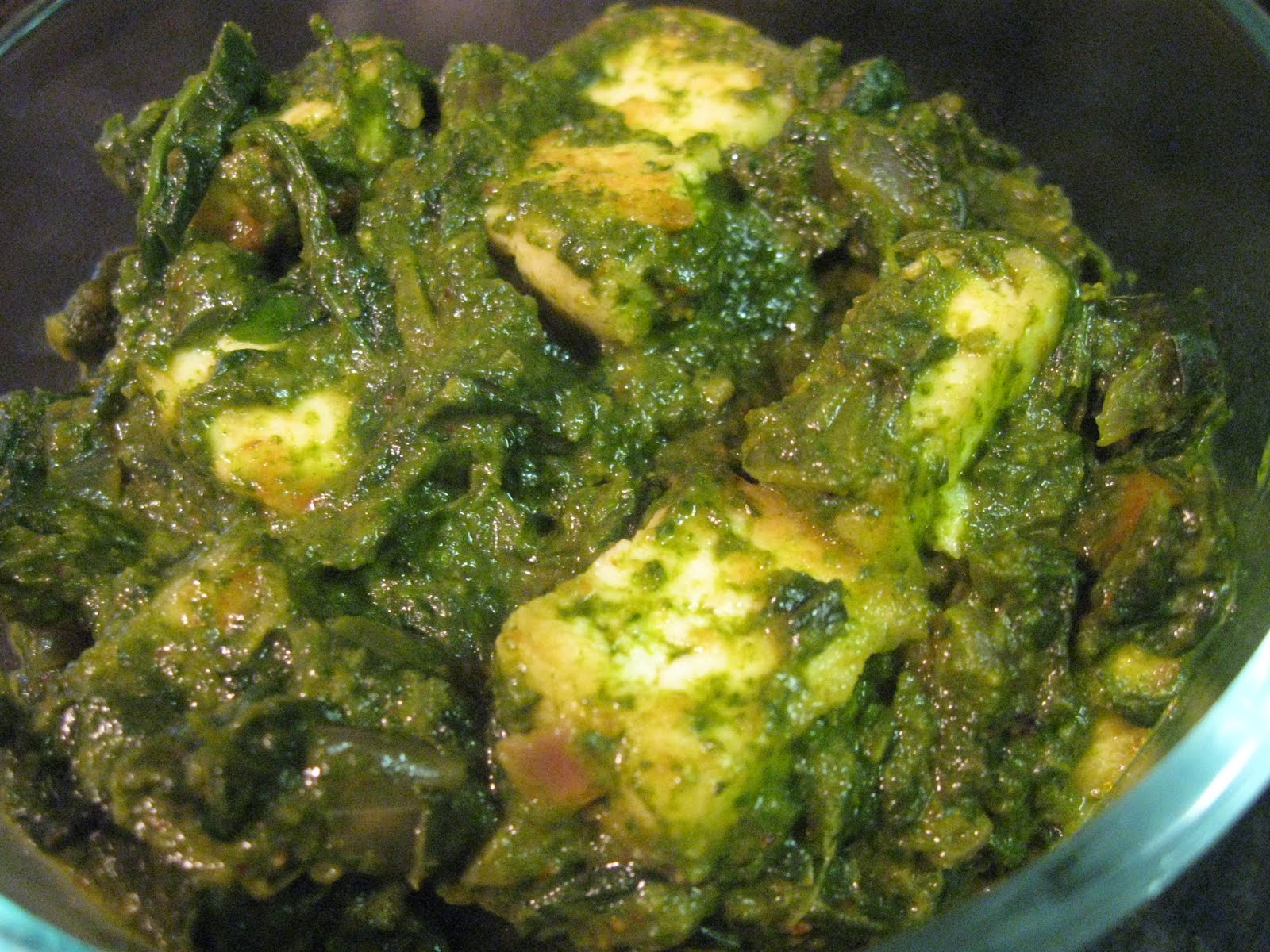
Paalak Paneer


The entire purpose of yesterday's experiment in cheese-making was to make this dish: Paalak Paneer. Simply defined, this common Indian dish is a cheese and spinach curry. It is deceptively simple to make (once you have secured your paneer, anyway). And I found it to be a pleasant way to trick my husband into eating a hearty helping of leafy greens.

You should be able to find cubed paneer at any Indian market, but do consider making you own. The process is incredibly simple. You only need two ingredients. The one draw back is having to plan ahead to ensure the paneer has enough time to cool and become firm.

adapted from The Everything Indian Cookbook by Monica Bhide

serves 4

The Ingredients:
2 Tbsp vegetable oil
1 medium-sized onion, peeled and minced
2 1/2 tsp ginger-garlic paste (equal parts minced ginger and minced garlic)
1/4 cup tomato puree (fresh or canned)
2 Serrano green chilies, seeded and minced
1/4 tsp turmeric powder
1/2 tsp garam masala
1/2 tsp cumin powder
1/2 tsp coriander powder
1/4 tsp red chili powder
salt to taste
1 (10-oz) pkg chopped frozen spinach, thawed
1/2 cup water, at room temperature
1 cup paneer, fried*
1 Tbsp heavy cream, for garnish

The Process:
In a medium-sized pan, heat the vegetable oil on medium. Add the onion and fry, stirring continuously until the onions are golden brown in color, about 5 minutes.

Add the ginger-garlic paste and saute for 1 minute. Add the tomato puree and cook for 2 minutes.

Quickly add the serrano chilies, turmeric, garam masala, cumin, coriander, red chili and salt saute for 30 seconds.

Add the spinach and fry for about 3 minutes, stirring constantly. Add the water and cook, uncovered on low heat for about 20 minutes. If the mixture starts to dry out, add more water. Cook until spinach is soft.

Add the paneer to the spinach mixture; saute uncovered for 5 minutes. Garnish with heavy cream and serve hot.

*My paneer was home-made and barely one day old. To prepare the firm cake of cheese: cube the paneer with a sharp knife. In a deep skillet heat oil on medium. Pan-fry a few of paneer at a time until golden brown on all sides. A remove to a paper towel to cool and to drain the excess oil.

My Modifications:
I doubled the spinach and curry base, but kept the paneer to the generous cup that my cheese-making had yielded. I did not double the Serrano peppers, either...hoping to make a milder and more enticing dish for a broader scope of people.

And as recommended by a footnote on the recipe a pureed a portion of the spinach to create a creamier dish.

The Review:
Healthy, hearty and full of flavor. Despite the strong Indian spices, ginger and garlic, the mild lemony flavor of the paneer held its own. The flavor of the spinach, however fell by the wayside.

I was incredibly pleased with this vegetarian entree...the only thing I may try differently is using fresh spinach...especially now that the farmer's markets are out in full force.

Thursday, June 9, 2011

Paneer


The first time I encountered paneer, it was on the buffet of an Indian restaurant. I dismissed the cubes as flavorless tofu and passed it on for tikka masala and naan. Little did I know I had just turned down one of the world's simplest forms of cheese.

To make amends to this Indian delight, I purchased a half gallon of whole milk, dug out my candy thermometer, sieve and cheesecloth, and set to.

Unaged, acid set and with not a trace of salt, paneer is a great introduction to cheese making.

adapted from The Everything Indian Cookbook by Monica Bhide
the visually inclined can view the step by step process here

yields approximately one cup

The Ingredients:
8 cups whole milk
2 lemons, juiced

The Process:
Bring the milk to a boil in a large pan over medium heat. Line a sieve with several layers of cheesecloth. Set aside the sieve in a clean dry sink.

Once the milk has reached the boiling point, remove the pan from the heat. Add the lemon juice slowly. The milk will begin to form a curd cheese. Using a wooden spoon, stir the mixture until all of the milk has curdled, about 1 to 2 minutes. You will see the curd cheese, which white, separating from the whey, a cloudy-looking liquid.
Pour the mixture into the cheesecloth-lined sieve to drain off the whey. When the cheese has cooled (about 20 minutes), fold the corners of the cheesecloth and squeeze to remove any remaining whey. To make the paneer firm, put it between 2 large plates and place something heavy (such as a large pot of water) on top to weigh it down. Once it has set for about 2 hours, remove the cloth.

My Modifications:
I only used about half of my lemon juice before the milk began to curdle...taking my cue from another paneer tutorial, I added the citrus a tsp at a time. You'll be surprised how little you need.

I cooled the curds and whey in the pot before straining. And while straining I rinsed the curd with cold water to remove any remaining whey. The whey has a very tart flavor that I did not want to affect the final product.

The paneer was weighted down overnight, until I was ready to use it in a palak paneer recipe.

The Review:
I made my own cheese. Seriously. How amazing is that! The flavor of the paneer was incredibly mild...sort of like a ricotta, but creamier and with a very subtle lemony aftertaste. The texture was smooth and firm, but just a touch grainy. I have read elsewhere that soaking the paneer cool water for 2-3 hours prior to use yields a more tender cheese. I was in too much of a hurry the next day to cube my creation and fry it for the palak paneer to take that extra step. Perhaps next time.

For those leery of fat content...I have read that milk other than whole can be used, but yields a much less creamy result.

The uses for the cheese are boundless...served cubed and plain, or with chutneys as an appetizer; added to a number of Indian curries--saag, palak, matter to name few; dressed up in salads; sweetened up and served for dessert. I'm going to love trying this again. And again. And again.

I have read that milk other than whole can be used, but yields a much less creamy result

Saturday, March 26, 2011

Shrimp Jalfrezi


I don't remember what my first experience with Indian food was, but over the years chicken jalfrezi has become a stand by. I was thrilled to find a shrimp version of this favorite in an Indian cookbook I had purchased. Upon perusing the ingredients list, I became even more excited. The list was short...and the cook time even shorter. I had high, high hopes of recreating the dish in my own kitchen.

adapted from The Everything Indian Cookbook, by Monica Bhide.

serves 4

The Ingredients:
3 Tbsp vegetable oil
1/2 tsp cumin seeds
3 dried chilies, broken
3 Serrano chilies, slit down the side and seeded
1 large red onion, peeled and diced
1 large tomato, deseeded and diced
2 medium bell peppers, deseeded and diced
2-inch piece fresh ginger root, julienned
1/2 cup tomato puree
1 pound medium shrimp, peeled and deveined
1/2 tsp turmeric powder
table salt to taste

The Process:
In a medium-sized skillet, heat the vegetable oil. Add the cumin seeds; when they begin to sizzle, add the red and green chilies, onion, diced tomato, ginger, and bell peppers in quick succession. Saute on high heat for about 2 minutes.

Add the tomato puree and cook for 3 to 4 minutes.

Add the shrimp, turmeric, and salt; saute for 3 to 4 minutes or until the shrimp are cooked through. The vegetables will still have a slight crunch to them. Serve hot.

My Modifications:
Due to a difference in heat tolerances between myself and other diners, I reduced both the Serrano pepper and dried chilies to two each. The dried red chilies I had on hand were New Mexico chilies, which are fairly mild to began with. For the bell peppers, I used one red and one green. And lacking a red onion, I substituted a yellow onion instead.

The Review:
I was a little let down by this version of a Jalfrezi. Tomato and bell pepper dominated the flavors, and the heat was far, far too mild for this dish. Aside from the subtle ginger flavor, the dish could have passed for a creole stew. The rich balance of sweet, sour, salty, spicy, bitter and astringent that Indian cuisine is renowned for was sadly lacking.

That being said, the dish was delicious. And you really can't beat the short amount of time it takes to prepare. It was just far from what I had hoped for. Next time around I believe I will take my cue from the recipe listed at indiancurry.com

Wednesday, March 9, 2011

Baked Samosas

I've tackled spinach phyllo triangles. I've mastered Cornish pasties. Time to take on the Indian samosas. And as today is Ash Wednesday, I opted to try a meat-free recipe...as well as a healthier, non-fried version.

adapted from Everyday Indian by Bal Arneson

yields 8 samosas

The Ingredients:
shell
1 cup whole wheat flour
1/2 tsp salt
2 Tbsp grapeseed oil
3 Tbsp + 1 tsp warm water

Fillling
one 14 oz can chickpeas, drained
1 cup cooked brown rice
1/4 cup dried cranberries
1 Tbsp garam masala
2 tsp cumin seeds
1 tsp red chili flakes
1 tsp ground dried ginger
1 tsp salt

The Process:
Combine the flour, salt and oil in a bowl. Mix until the oil is evenly distributed. Mix in the water and knead for 2 to 3 minutes, until it has a smooth consistency like pizza dough. Set aside while you prepare the filling.

For the filling, mix all of the ingredients gently in a large bowl until the garam masala is evenly distributed.

To make the samosas, preheat the oven to 425.

Divide the dough into 4 pieces and form each into a ball. Take 1 piece of dough and form it into a round flat shape. Dust your working surface with flour so the dough doesn't stick. Using a rolling pin, roll the into a thin patty (like tortilla). Cut the circle in half.

Take 1 half-circle and make a cone shape. Wet the edges with a little water to glue the overlapping edges together. Put 1/4 cup of the filling in the cone. Moisten the top of the inside edges and close the cone, pressing the edges to seal it. Brush the grapeseed oil on each side of the samosa and place on a baking sheet. Repeat with the remaining ingredients.

Place in the preheated oven and bake for 10-12 minutes, then flip the samosas and bake for an another 5 minutes, or until the samosas are nicely browned. Serve with chutney.

My Modifications:
I've become much in tune with the flavor of cumin and a little overwhelmed by it; so in this batch of Indian inspired cuisine, I lessened the amount by half. I also found I needed to use just over a 1/4 cup of water to form the dough into the right consistency...I blame our dry apartment.

The Review:
Patience is a virtue that you may need to accomplish this recipe. On the surface everything seems quite simple and straight forward. And the process was simple and straight forward until I began rolling out the shell dough. I never would have thought rolling out 4 little dough balls would be so hard. The dough crumbled. It dried out incredibly quickly. And I had little info to go on as to the size and thickness of the circles aside from "like a tortilla." I translated that to mean about 8" in diameter and as thin as possible. After the rolling and stuffing the first few, the technique came more easily. But I would highly recommend covering the remaining dough with cling wrap or a damp towel while not in use, to prevent it from over drying.

I ended up filling each samosa with a scant 1/4 cup. And in the end half of the filling remained unused. Next time around I'll probably double the shell recipe. Although after the difficulty I had rolling out the dough, I may search for a new shell recipe. A quick search online yielded a site devoted solely to samosa. And while the dough recipe there is very similar to the one I used, they did recommend pre-made puff pastry for baked variations of the treat. I'd imagine this would cut the frustration factor down remarkably.

All in all the flavors were good and the samosas themselves very filling. They seemed a titch dry right out of the oven, but grew more tender as they cooled down. A side of chutney is definitely in order the next time around.

Although, one of the joys of such a dish is the countless variations of fillings that can be used. Maybe the second time around will be more successful.

Friday, March 4, 2011

Fish in a Velvety Sauce


Or Bengali doi maach. This Bengali, or Eastern Indian dish is a mild fish curry in a yogurt sauce. The ingredient list was much shorter than many of the other Indian dishes I've prepared, and far less intimidating. This recipe could serve very well as an intro to Indian curries...both for those interesting in tasting Indian cuisine and those who wish to try their hand at cooking it.

adapted from The Everything Indian Cookbook by Monica Bhide

serves 4

The Ingredients:
4-5 catfish or tilapia filets (about 1 1/2 lbs)
3/4 tsp turmeric powder
8 Tbsp vegetable oil, divided
1 bay leaf
2 tsp ginger-garlic paste*
1 large onion, minced
1 tsp red chili powder
2 serrano chilies, seeded and minced
1/2 cup plain yogurt, whipped
table salt to taste
water, as needed

*ginger -garlic paste is essentially equal parts fresh ginger and garlic, blended into a paste with the optional serrano pepper thrown in for heat.

The Process:
Place the filets in a bowl. Rub well with the turmeric and set aside for about 10 minutes. Rinse the filets and pat dry.

In a medium-sized skillet, heat 6 Tbsp of the oil. Add the filets one at a time and fry until browned on both sides. Remove from heat with a slotted spoon and drain on paper towel. Continue until all filets are fried. Set aside.

In a large skillet, heat the remaining 2 Tbsp of vegetable oil. Add the bay leaf and cumin seeds. When the spices begin to sizzle, add the ginger-garlic paste and onions; saute for about 7 to 8 minutes, or until onions are well browned.

Add the red chili powder and green chilies, mix well. Add the yogurt and salt to taste, and mix well. Add about 1/2 cup of water. Simmer, uncovered on low heat for about 10 minutes, stirring constantly.

Add the fish filets and simmer for another 5 mintues. Be careful not to break the filets when you stir. Serve hot.

My Modifications:
I opted to use tilipia in lieu of catfish, and the daintier filet held up quite well in this sauce. Though the recipe stated to rinse the fish after rubbing in the turmeric, our filets went straight into the oil with their bright orange spice dusting intact. I also used about half of the oil called for in the recipe...just enough to evenly coat the bottom of the pan. After frying the fish, this oil was reused to start the sauce, instead of heating new oil.

Given the size of the onions at our grocer, I only used half of an incredibly enormous red onion. Only one serrano was used as well, as I was afraid of overpowering the delicate flavor of the tilapia.

Upon adding the yogurt, the dairy immediately curdled, creating a sauce that looked far from velvety. I'm not sure what caused the culinary mishap, but in the error I did realize I had chopped, not minced the onion. The resulting sauce seemed far more chunky and runny than I had envisioned...and far from appetizing, though the sauce did smell amazing. A quick run through the food processor smoothed the sauce into the cheerful yellow curry I had hoped for. And the resulting dish was quite well received.

The Review:
I was a little worried for a minute when the sauce looked far from velvety. But in the end, all turned out well. Other variations of the recipe call for onion ground into a paste, so I don't feel too far off for having to run my sauce through the food processor before adding the fish back into the skillet. I'd imagine the dish would work quite well with a wide range of flaky white fish, and I was pleasantly surprised that the sauce did not overpower the tilapia. Of the meal, Ross simply said "yum"...a huge endorsement for one who refused to even try Indian food a scant two years ago!

Sunday, February 27, 2011

Kidney Bean and Yam Stew with Oranges

Winter's not giving up its frigid grasp and the colds are making their rounds again. So this thick Indian stew sounded perfect to fight off the chills and sniffles. Yams, kidney beans, oranges, garlic, ginger...talk about a bowl full of health. How much beta carotene, vitamin C, fiber, protein can one really cram into a single meal? I refuse to get sick now, with spring so close!

adapted from Everyday Indian by Ball Arneson

Serves 4

The Ingredients:

2 Tbsp grapeseed or olive oil
2 Tbsp finely chopped ginger
2 Tbsp finely chopped garlic
1 tsp fenugreek seeds
2 Tbsp cumin seeds
1 Tbsp garam masala
2 bay leaves
1 tsp dried oregano
1 tsp rosemary, dried or fresh
1 tsp ground turmeric
1 tsp salt
one 14 oz can of crushed tomatoes
2 cups cooked, cubed yams (approximately 2 medium)
1 cup water
one 14 oz can kidney beans, rinsed and drained
2 cups peeled, cubed oranges (approximately 2 medium)

The Process:
Place the oil, ginger, garlic and fenugreek seeds in a big pot over medium-high heat and cook for 2 minutes. Add the cumin, garam masala, bay leaves, oregano, rosemary, turmeric, and salt, and cook for an additional 2 minutes.

Add the tomatoes, yams and water: increase the heat to high and bring to a boil. Reduce heat to a simmer and cook for 7 to 9 minutes. Add the kidney beans and oranges and cook for 1 minute. Turn off the heat, cover and let stand for 10 minutes. remove bay leaves and serve.

My Modifications:
I lacked fenugreek seeds in whole form, but had the ground seeds on hand. I substituted that at half the amount. And while on the subject of spices, I've begun making my own garam masala blend. My recipe consists of whole cloves cumin seeds, green and black cardamom pods, coriander seeds, peppercorns, a bay leaf, a cinnamon stick, and a pinch of nutmeg. Countless variations of this Indian stable abound. Feel free to experiment...or pick up a pre-made variety at the store.The original recipe did not specify that the yams be cooked, though given the short cook times listed it seemed unlikely the tubers would be tender without a little pre-stew prep. I prefer to bake mine in the oven for about an hour, but in a pinch the microwave will do the trick. The original recipe also did not specify to peel the oranges. The thought to chewing on orange peel did NOT appeal...so their exteriors were disposed of prior to cubing and adding to the pot. Mine oranges were a seedless variety.

The Review:
The warm oranges were a bit odd, and the cumin a tad overpowering, but overall the stew was a big hit. It struck me as sort of like the Tex-Mex chili's long lost cousin. The kidney beans gave the stew the hardy parallel. And the cumin lent a familiar flavor. But the meat was hardly missed. It's nice to have another vegan friendly main course in the arsenal.

Monday, January 10, 2011

Parsnip and Chickpea Indian Stew

In honor of the oft overlooked root vegetable....the parsnip.

The full title of this recipe is "parsnips and chickpeas in a garlic, onion, chili and ginger paste." Much more evocative, don't you agree? This dish serves up as a hearty vegan stew rich with Indian flavors.
Adapted from Main Courses 365 edited by Jenni Fleetwood.

Serves 4-5

Ingredients
7 oz dried chickpeas, soaked overnight and drained
7 garlic cloves, finely chopped
1 small onion, chopped
2 inch piece of fresh ginger
2 green chilies, seeded and chopped
scant 2 cups, plus 5 tbsp of water
4 tbsp peanut oil
1 tsp cumin seeds
2 tsp coriander seeds
1 tsp turmeric
1/2 - 1 tsp chili powder
2 oz cashew nuts, toasted and ground
9 oz tomatoes, peeled and chopped
2 lbs parsnips, cut into chunks
1 tsp ground cumin
fresh lime juice to taste
salt and pepper to taste

garish: fresh cilantro and toasted cashew pieces

My Modifications:
In the interest of saving time, I opted for canned garbanzo beans. I do not know the exact equivalent of dried chickpeas to canned, however one 14 oz can seemed to provide an ample but not overwhelming amount.
The chili of choice this time around was the serrano.
For a lack of peanut oil in my cupboard, I substituted vegetable oil.
Because of my fascination with Indian cooking, I do indeed have both cumin and coriander seeds on hand. Do not use their ground counterparts as a substitute...they do not quite have the same taste, nor do the ground seasonings add that extra little crunch you get from the seeds. Penzeys spices carries both coriander and cumin...ground and in seed form.
For a lack of enough fresh tomatoes, I choose a 14 oz can of diced.

The Process:
If using dried chickpeas...after soaking overnight, drain and put in a pan. Cover with cold water and bring to a boil. Boil vigorously for 10 minutes, reduce to a simmer, then continue cooking for 1-1 1/2 hours. Drain and set aside.

Or, if using canned...open the can, strain, rinse and set aside.

Set aside approximately 2 tsp of the minced garlic, as well as half of the chopped chili. Place remaing garlic and chili, along with the onion, ginger and 5 tbsp of water into a blender or food processor. Blend until smooth.

Heat a large deep frying pan and add cumin seeds and coriander seeds. Dry roast for about 2 minutes. Remove from the heat and cool slightly. Add the oil. (The original recipe calls for adding the seeds directly to the oil. I prefer dry roasting them first to release more of their fragrance.) Return to stove top and add the turmeric, chili powder and cashew nuts, stirring until well combined. Add the ginger-garlic-onion paste and cook, stirring frequently until the water begins to evaporate. Add the tomatoes and stir until well combined.

Add the remaining scant 2 cups of water, along with the chickpeas and parsnips. Add 1 tsp salt plus ground pepper to taste. Bring to a boil, reduce to a simmer and then cook, uncovered for 15-20 minutes...or until the parsnips are tender.

Return the mixture to a boil to reduce the remaining liquid to a thick sauce. Stir in ground cumin, the reserved garlic and chili, and lime juice to taste. Cook for an addition 1-2 minutes. Serve with a sprinkle fresh cilantro and toasted cashews.

The Review:

I am a huge fan of Indian flavors to begin with but I absolutely adored this dish. I did not miss the meat in the least. And the heartiness and heat of the stew is perfect for winter. The textures were plentiful...the tender yet firm parsnips, the smoothness of the chickpeas and the crunch of coriander and cumin seeds. The flavors were pretty well balanced. Early in the process the ground cashews were fairly prominent, but as the dish simmered on everything blended into a beautifully deep and rich sauce. If you like a lot of kick, feel free to up the number of chilies. I found 2 serrano to be just the right amount of lip tingle for me. And as prepared above this dish is completely vegan friendly.